
Real plants, no watering, no daylight
Preserved plants are natural plants whose sap has been replaced with a preserving solution, most often based on plant glycerine. The plant keeps its suppleness, texture and colour. It no longer grows, so it needs no water, no soil and no daylight.
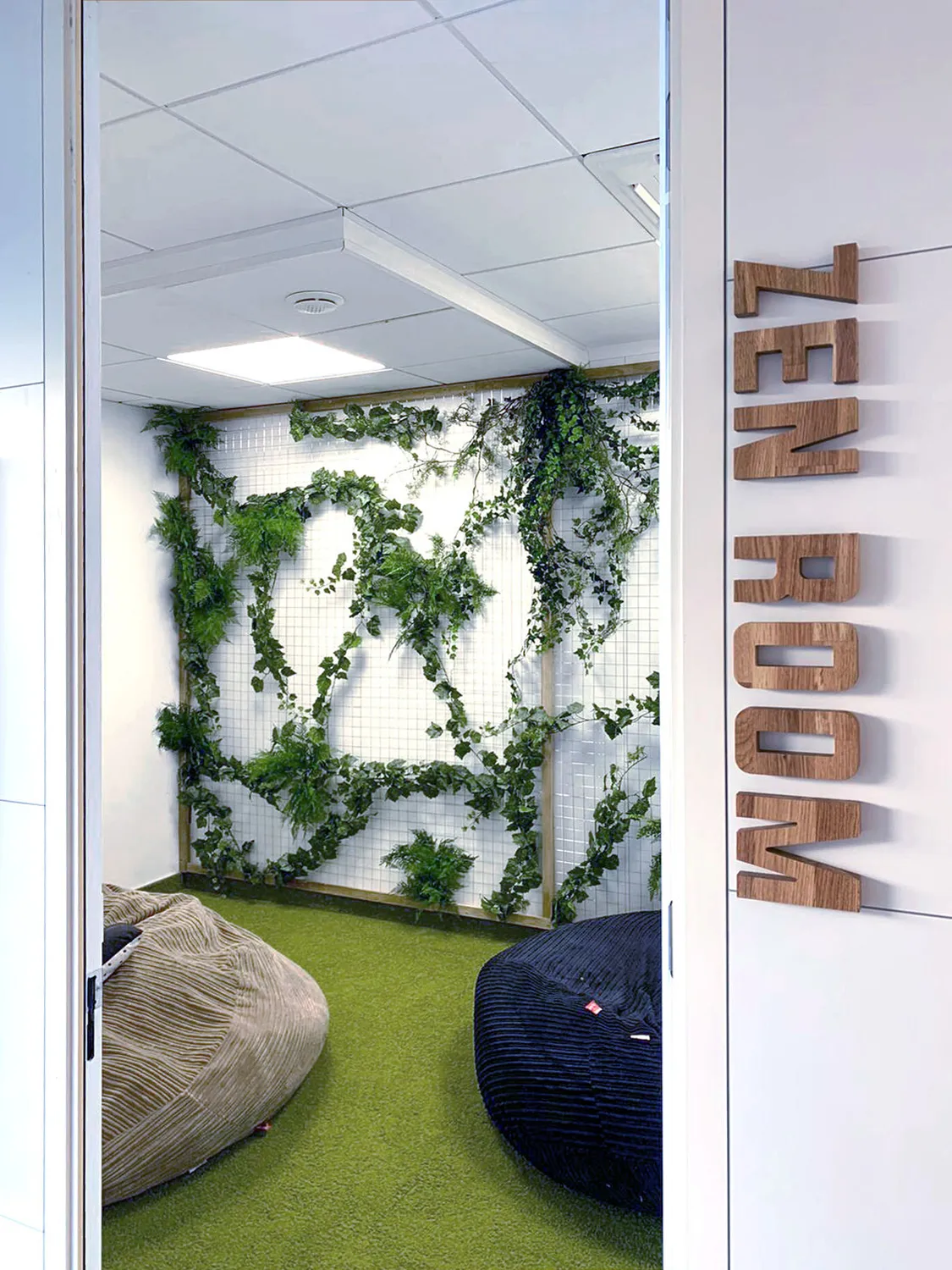
That is what lets it go where a living plant would not last: a windowless lobby, a corridor, an inner meeting room, an event stage. We design the composition, make it to measure and install it, from a small frame to a reception wall.
What's at stake
Three reasons to choose preserved plants over living plants or a printed décor.
No plant care
No watering, no pruning, no irrigation system. Light dusting is enough.
A real material
Moss, lichen or foliage: you touch real plants, not a print. The depth and shades make the difference.
A bespoke shape
Full wall, frame, partition or cut-out logo: the composition follows your floor plan and your visual identity.
What are preserved plants?
Preservation is a conservation process. The plant is harvested, then its sap is gradually replaced with a solution that keeps it supple. Depending on the plant, a dye is added to fix the colour. The result is still a natural plant: neither plastic nor dried foliage that crumbles in your fingers.
It should not be confused with a living green wall, which needs a growing medium, water, suitable lighting and a maintenance contract. A preserved plant is no longer alive. It does not purify the air or produce oxygen: its role is decorative and, for mosses, partly acoustic.
Moss, lichen and foliage: the materials
Each plant has its own look. They are often combined on the same wall to create depth and areas of colour.
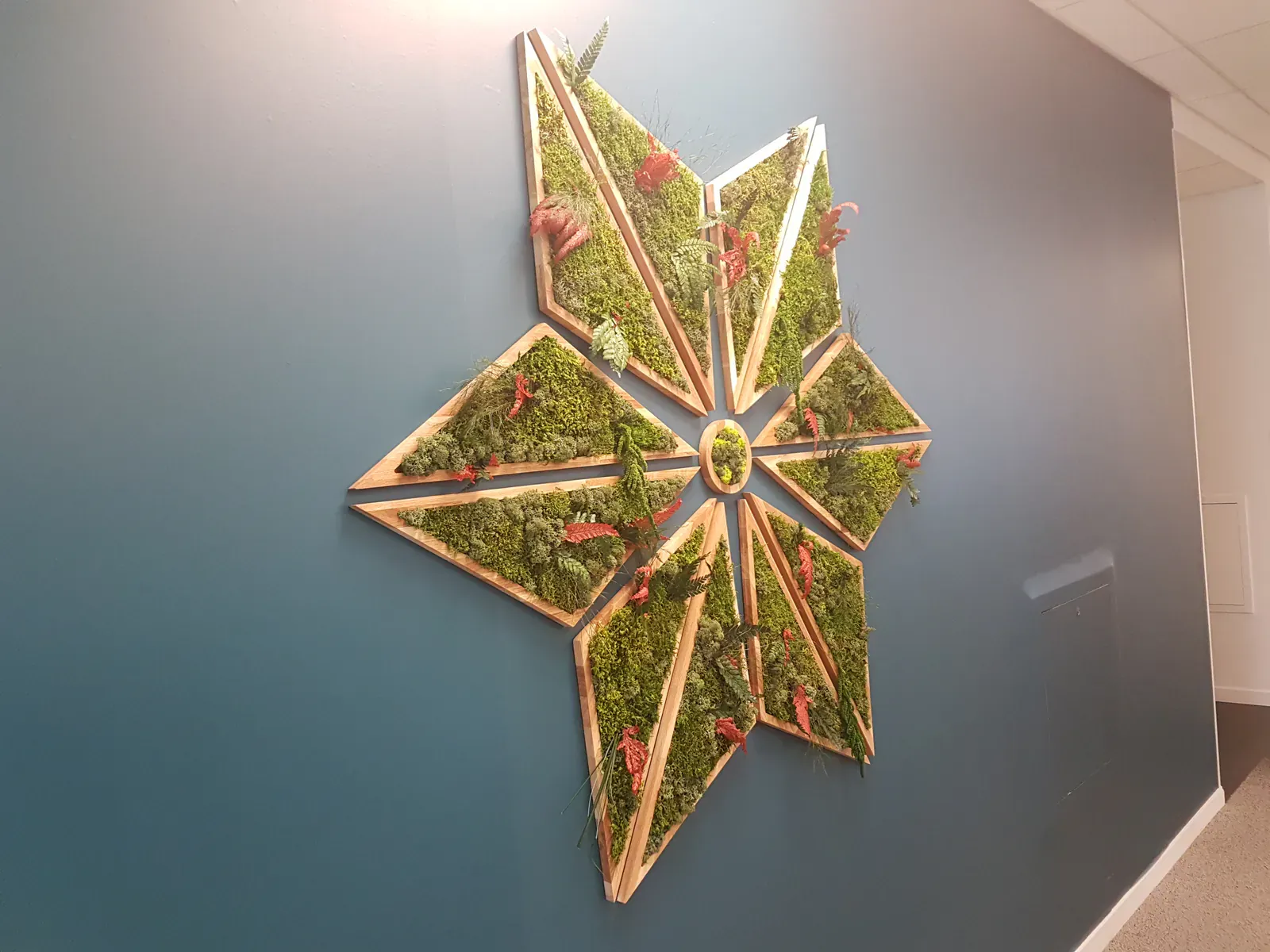
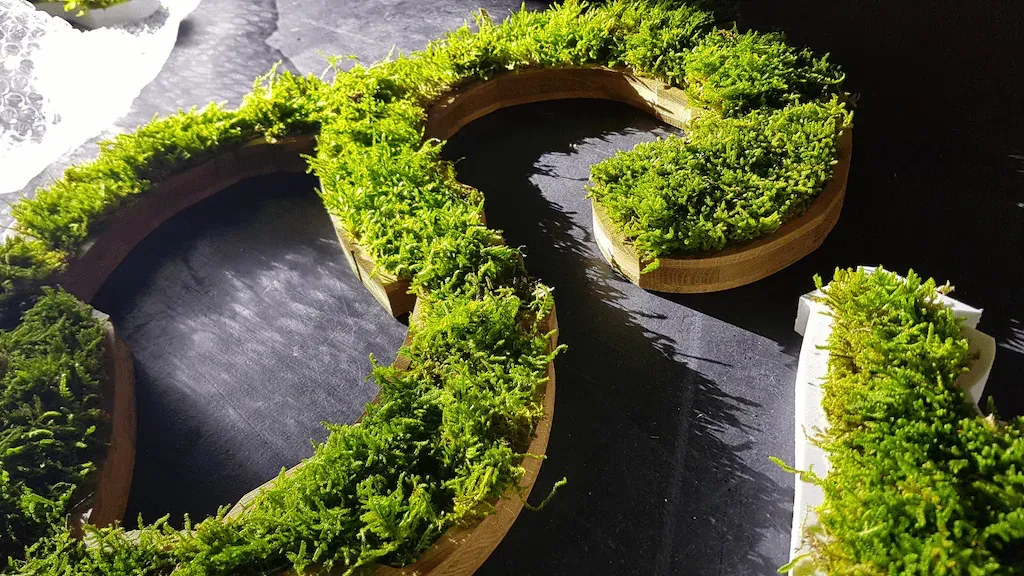
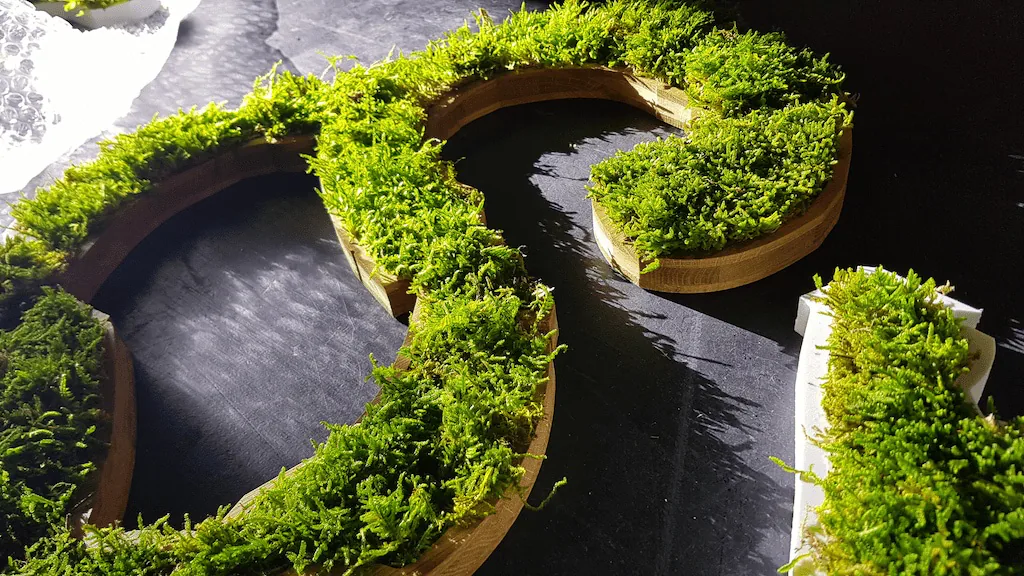
- Ball moss: rounded, highly textured cushions that add volume and shadow.
- Flat moss: a dense, even surface, ideal for a plain background or a crisp logo.
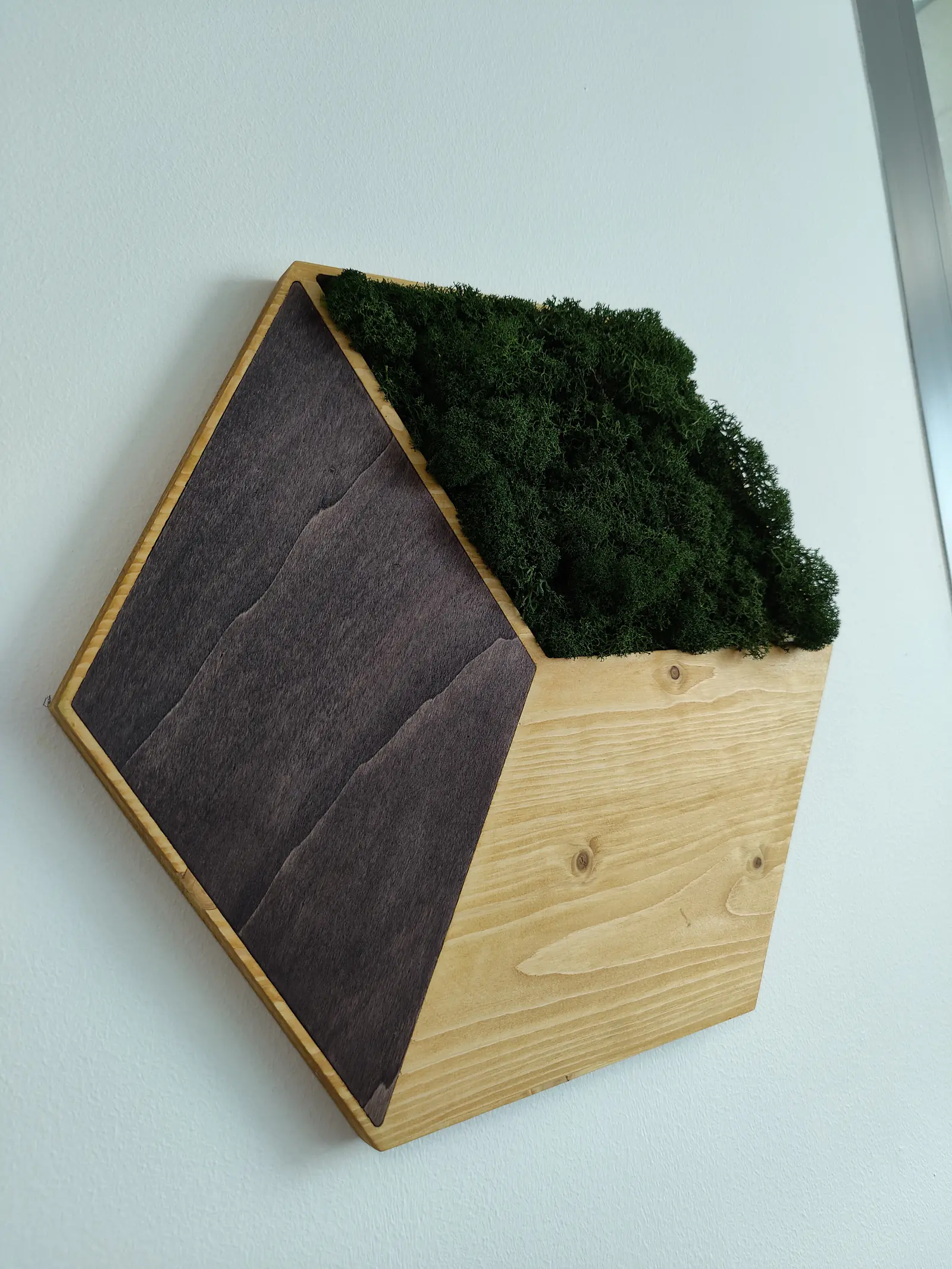
- Lichen: a light, curly material available in many colours, well suited to frames and lettering.
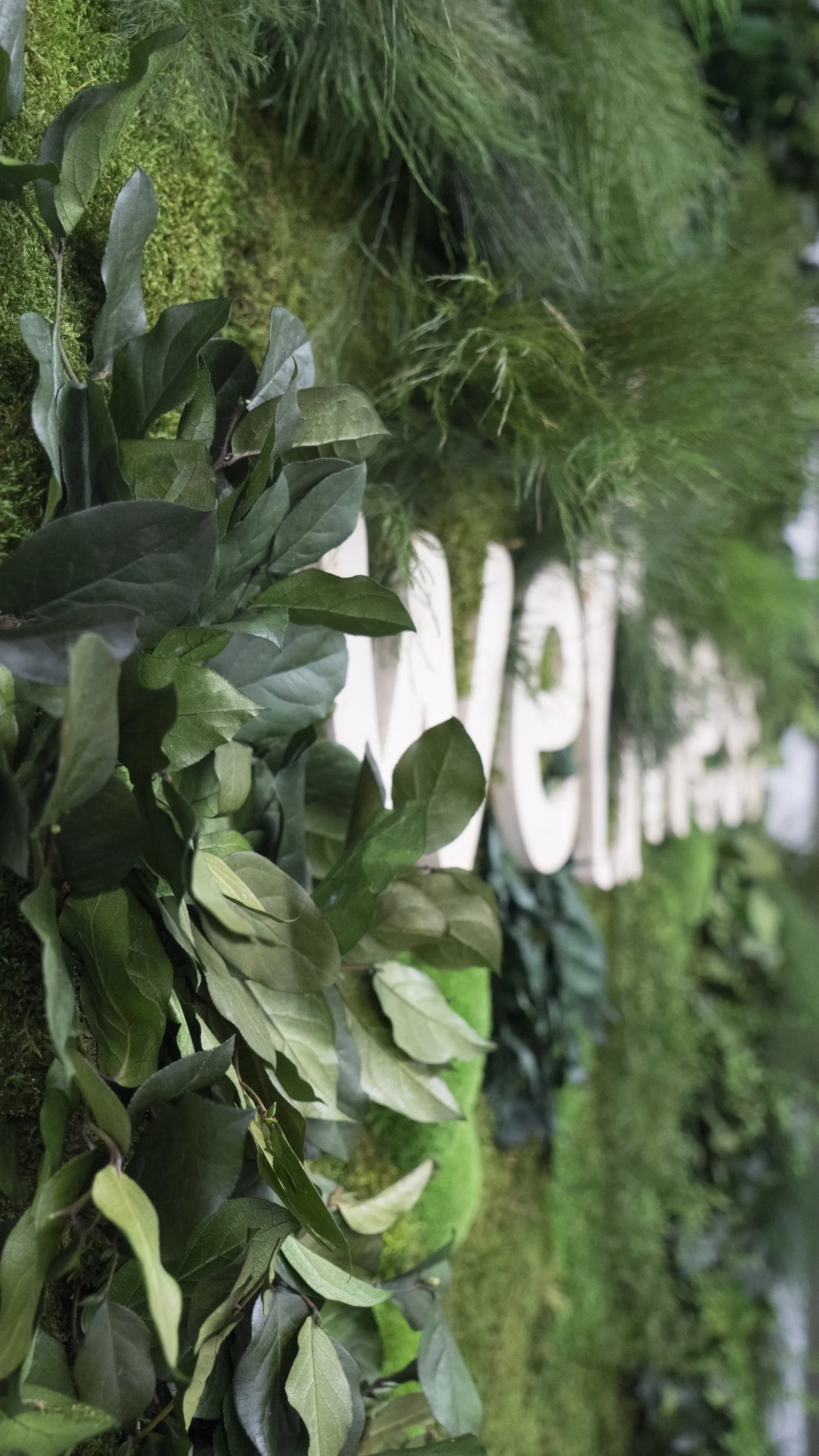
- Preserved foliage: ferns, eucalyptus or palm leaves, for more graphic compositions or atmospheric décors.
- Backings and finishes: background panel, wooden frame, logo-shaped cut-out, combined with wood or metal depending on the project.
Preserved moss walls, frames and logos
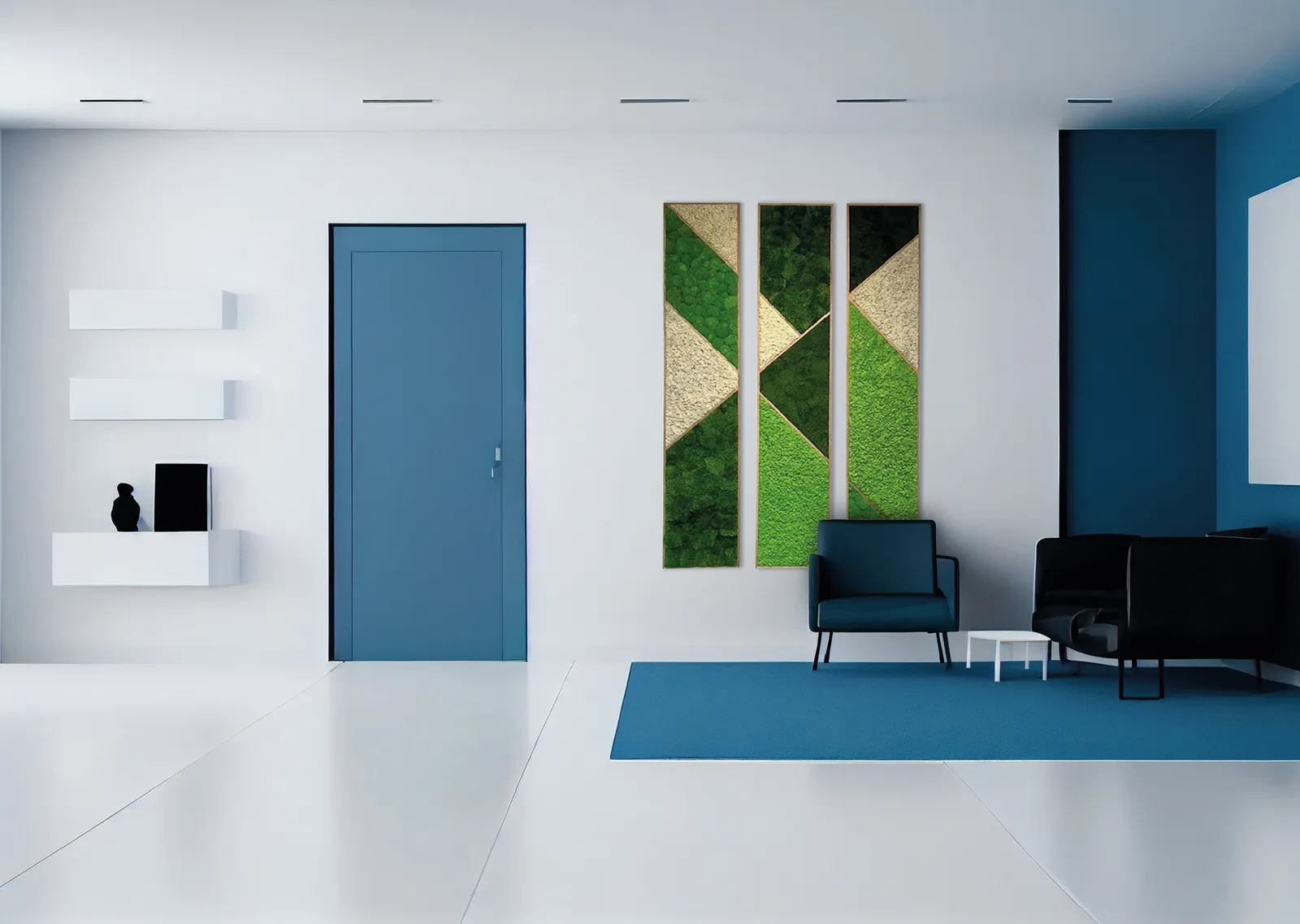
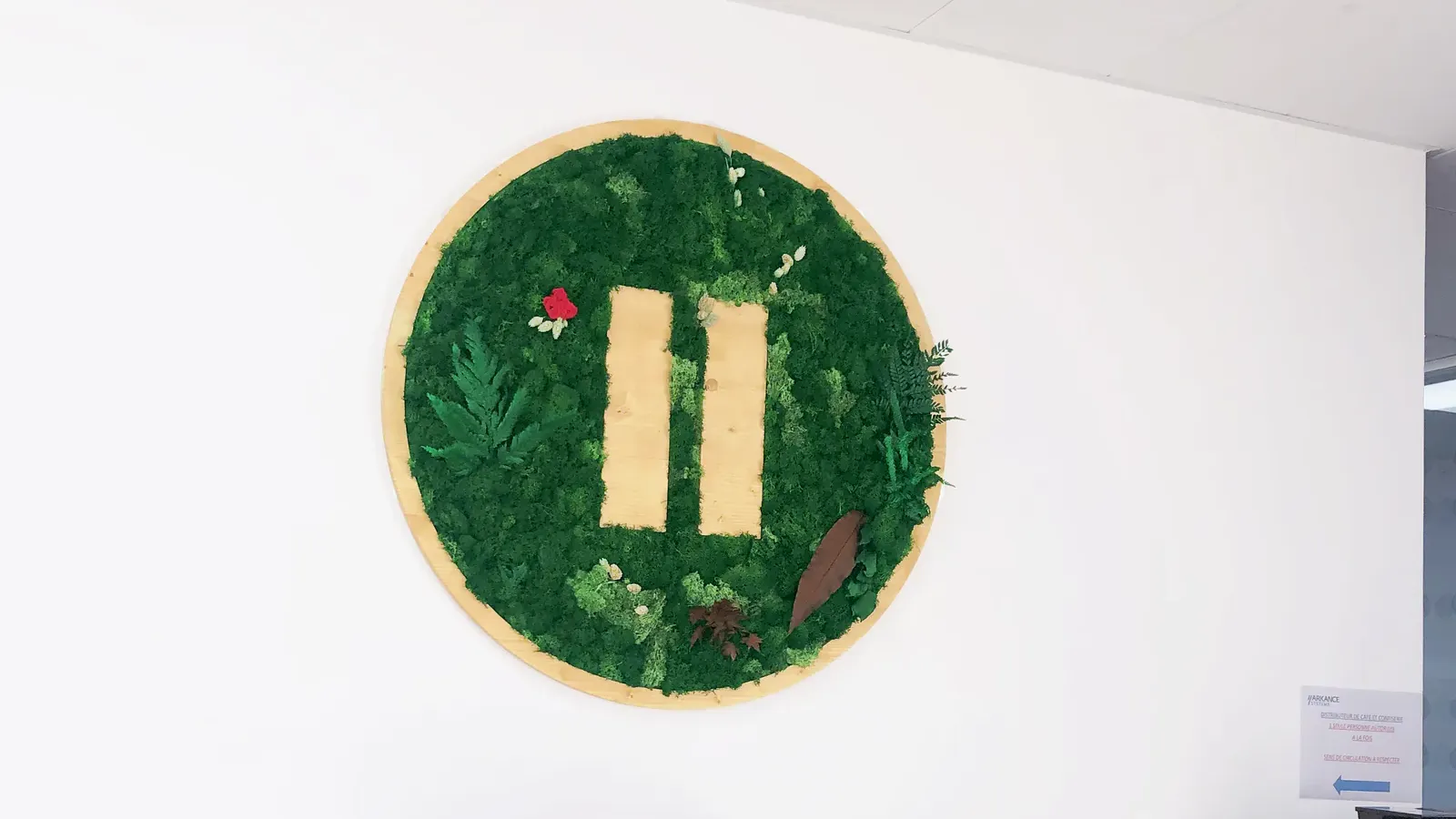
A preserved moss wall dresses a reception wall, a partition or the back of a meeting room. It can cover the whole surface or form a framed panel. For a lighter format, a preserved plant frame hangs like an artwork and can move if the layout changes.
The plant logo is the most requested use in offices. At Payplug, the logo in white letters stands out against a preserved plant wall at the entrance. We explain this technique on our plant logo page.
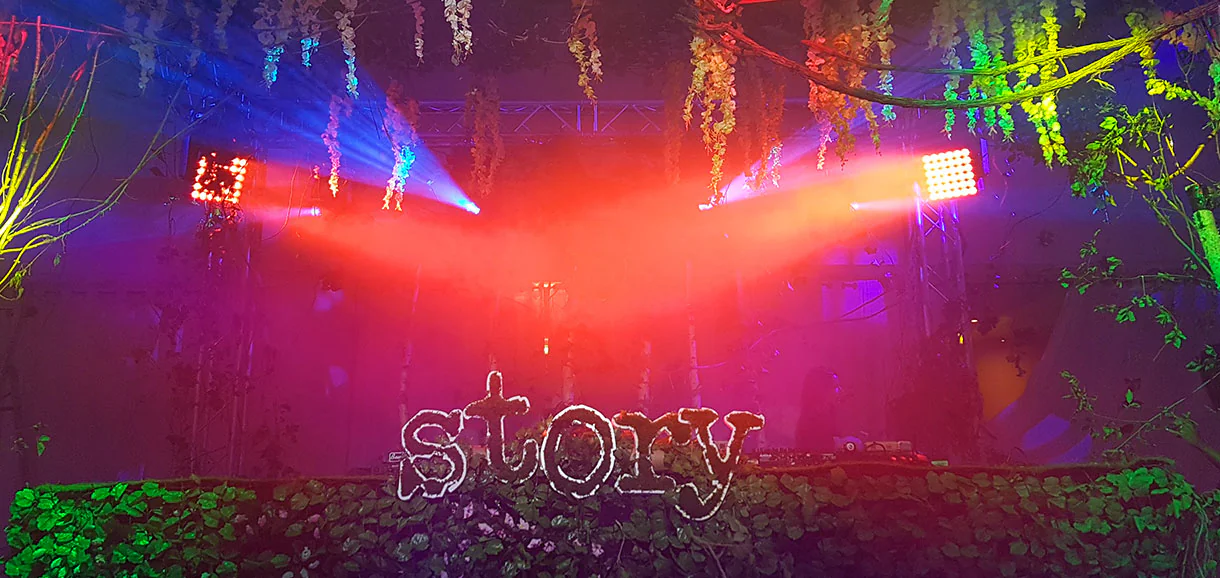
In hospitality and events, preserved plants also serve as scenery. For the show floor of the Jo&Joe hotel, we made a giant preserved plant logo alongside graffiti artist Nilko. For the Cocobeach and Story parties, it created forest worlds around the stage, with backlit lettering, set up and taken down by our team.
Installation conditions and care
Preserved plants are for indoor use only. They dislike direct sunlight, which fades the colours, and swings in humidity. Very high relative humidity, above roughly 70%, can make moss damp to the touch. Conversely, very dry air, near a heating or air-conditioning vent, makes it more brittle.
We check the location before designing: exposure, ventilation, footfall. Once installed, care is limited to light dusting with a feather duster or a low-pressure air blower. Avoid touching it, spraying it or cleaning it with water. In good conditions, it keeps its look for several years.
Acoustics and comfort
Preserved mosses have an irregular, porous surface. Over a large area, they help reduce reverberation in a room, an open-plan office or a meeting room. They are not a full acoustic treatment: when noise is a real issue, we combine the plants with dedicated acoustic panels.
Plants also bring colour and texture to spaces that are often very hard and mineral. They pair well with wood: see our wooden wall decoration page.
How a project runs
It all starts with a brief: the place, the area, the message and the site constraints. We propose a mock-up that places the plants in the space and sets out the materials, colours and backing. Once approved, the composition is made to measure, then installed by our teams, outside office hours if the offices stay open.
With more than 1,200 projects over 20 years of experience, we know how to make plants work with the rest of the décor: wall decoration, murals, signage or hotel and restaurant design. Explore the other approaches to eco-friendly decoration, including eco-friendly wallpaper, or brief us directly.
Also in eco-friendly decoration
Bespoke eco-friendly wallpaper for officesWalls printed to reflect your brand, on backings chosen for indoor air, fire safety and easy removal.DiscoverWooden wall decoration for offices and reception areasSlats, panels, logos and lettering in wood: a warm material, designed to measure, made and installed by our teams.DiscoverBack to eco-friendly decorationFrequently Asked Questions
Are preserved plants real plants?
Yes. They are natural plants whose sap has been replaced with a preserving solution, most often based on plant glycerine. They no longer grow but keep their suppleness and appearance.
Does a preserved moss wall need watering?
No. It must not be watered or sprayed. It needs no soil and no daylight. Care is limited to light dusting.
How long do preserved plants last?
Several years, depending on conditions. They keep best away from direct sunlight, high humidity and very dry air sources such as heating vents.
Do preserved plants purify the air?
No. A preserved plant is no longer alive: it does not purify the air or produce oxygen. Its value is decorative and, for mosses, it helps reduce reverberation.
Can preserved plants be installed outdoors?
No, they are for indoor use only. Rain, direct sunlight and changes in humidity quickly damage them.
Can you make a logo in preserved moss?
Yes. The logo can be made in moss on a neutral background, or in letters mounted on a plant wall, as at Payplug. The shape is cut from your file.
How is it different from a living green wall?
A living wall needs a growing medium, watering, lighting and regular maintenance. Preserved plants do without, but they do not grow or renew themselves.
Get your free quote
Tell us about your project, we'll get back to you.